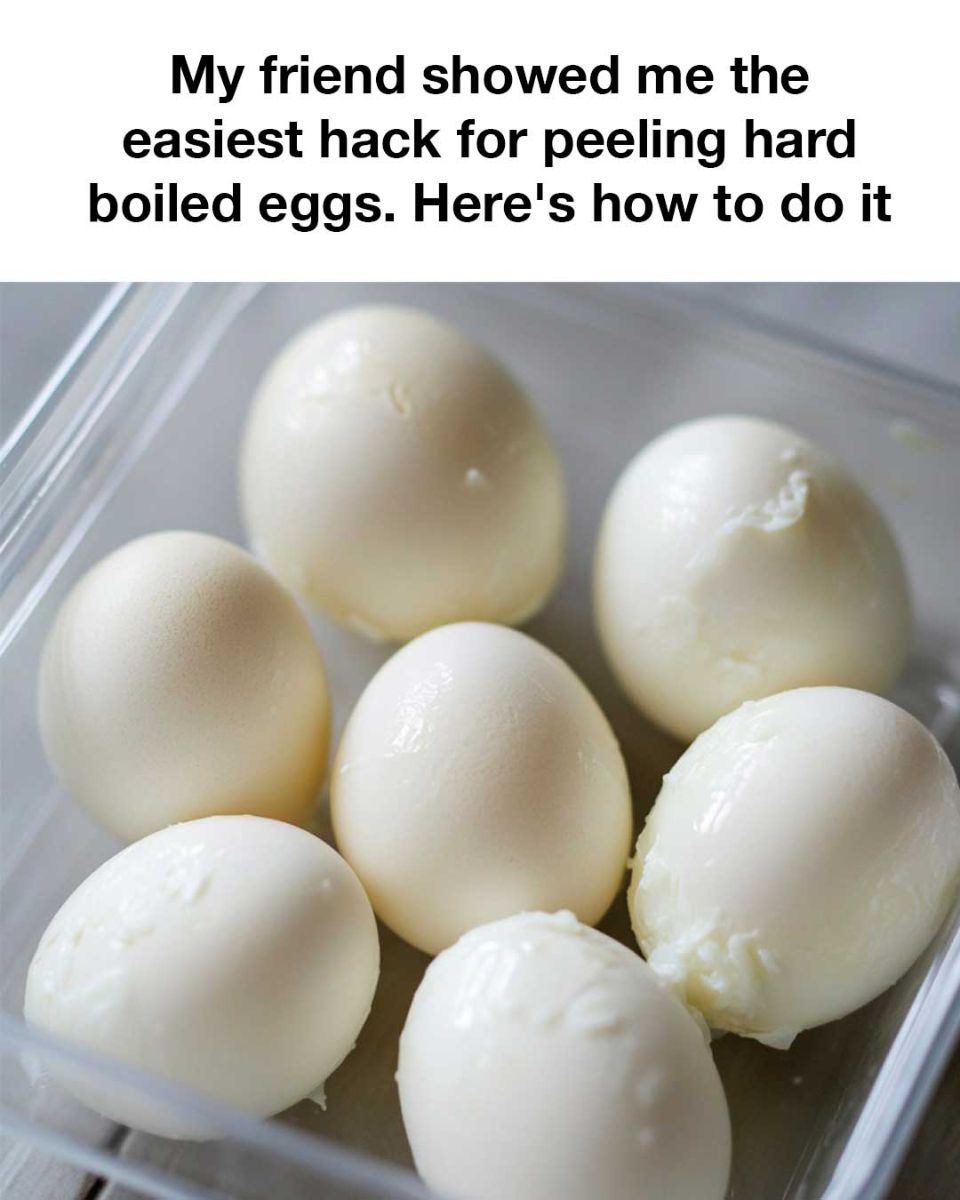
Why Are Hard-Boiled Eggs So Difficult to Peel?
Peeling problems arise because of the bond between the egg white and the membrane beneath the shell. Fresh eggs have a lower pH level, which causes the egg white to cling tightly to the shell’s membrane. As eggs age, their pH increases, loosening this bond, making them easier to peel. However, even older eggs can still be tricky to peel without the right technique.
The Hack: Shake and Roll Method
Here’s how the “Shake and Roll” method works to make peeling effortless:
Step 1: Boil the Eggs
Start by boiling your eggs as usual. Place the eggs in a saucepan, cover them with cold water, and bring it to a rolling boil. Once boiling, reduce the heat and let the eggs simmer for about 9-12 minutes (depending on how hard or soft you like your yolk). After cooking, transfer the eggs immediately into a bowl of ice water to cool them down quickly and stop the cooking process. Let them sit for at least 5 minutes.
Step 2: The Shake
Once the eggs are cool, place one egg in a medium-sized, sealable container (Tupperware or a small jar works well). Add just a small amount of cold water—enough to cover the bottom of the container. Seal the container tightly, then shake it vigorously for about 10-15 seconds. As you shake, the egg will knock against the sides and the water, causing the shell to crack and loosen from the egg white.
Step 3: The Roll
After shaking, open the container, take out the egg, and you’ll notice the shell starting to peel off. Now, gently roll the egg on a clean countertop or between your hands. The rolling motion helps to loosen any remaining shell bits, making it easier to remove the shell in large, smooth pieces. If small pieces are still clinging to the egg, rinse it briefly under cold water to clean them off.
Why This Method Works
see continuation on next page
