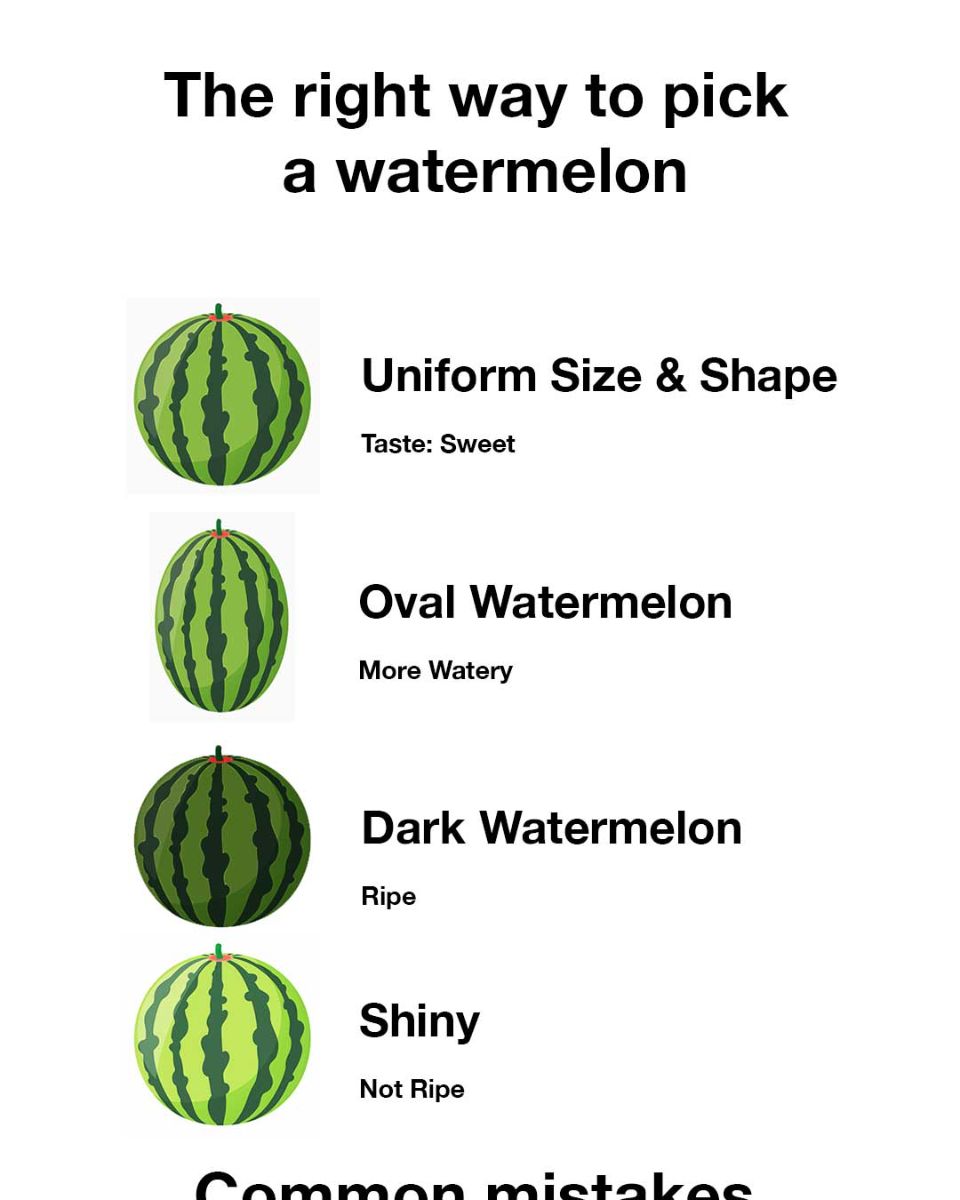
When it comes to choosing the perfect watermelon, relying on mere guesswork or tapping the surface is far from enough. Selecting a watermelon based on visual cues can be an art, and mastering this process ensures that you bring home the sweetest and juiciest fruit possible. Here’s an in-depth look at how to pick the best watermelon, avoiding common mistakes and maximizing your chances of enjoying a perfect fruit.
Step-by-Step Guide to Picking a Perfect Watermelon
Step 1: Look for a Uniform Shape Watermelons should have a consistent shape, whether round or oval. Irregularities in shape can suggest uneven growth, which might affect the texture and taste. A symmetrical melon usually indicates a well-balanced, ripe fruit.
Step 2: Check for the Field Spot The field spot is the area where the watermelon rested on the ground. This spot should be creamy yellow, resembling butter. A white or absent field spot suggests the watermelon was not fully ripe when harvested, which can lead to underwhelming flavor.
Step 3: Inspect the Color A ripe watermelon will have a deep green color, with stripes that are well-defined and consistent. Watermelons that are too light green or have uneven coloring might not be ripe, indicating they’re potentially underripe.
Step 4: Assess the Skin The skin of a watermelon should have a dull finish rather than a shiny one. Shiny skin can be an indication that the watermelon is underripe. Additionally, check for any cuts or bruises on the surface, which could impact the quality of the fruit.
Step 5: Look for Webbing Webbing refers to brown, web-like marks on the surface of the watermelon. These marks are generally caused by bees that pollinated the fruit multiple times. The presence of webbing can often indicate that the watermelon is sweeter and more flavorful.
Step 6: Size Matters While larger isn’t always better, a heavier watermelon is typically juicier. When comparing watermelons of similar size, choose the one that feels heavier. This suggests the fruit has a higher water content and will be more refreshing.
Step 7: Stem Check If the watermelon still has its stem, check for dryness. A brown, dry stem is a good indicator that the melon is ripe. A green, fresh stem usually means the watermelon was picked prematurely, which could lead to less flavor.
Common Mistakes to Avoid When Picking a Watermelon
see continuation on next page
