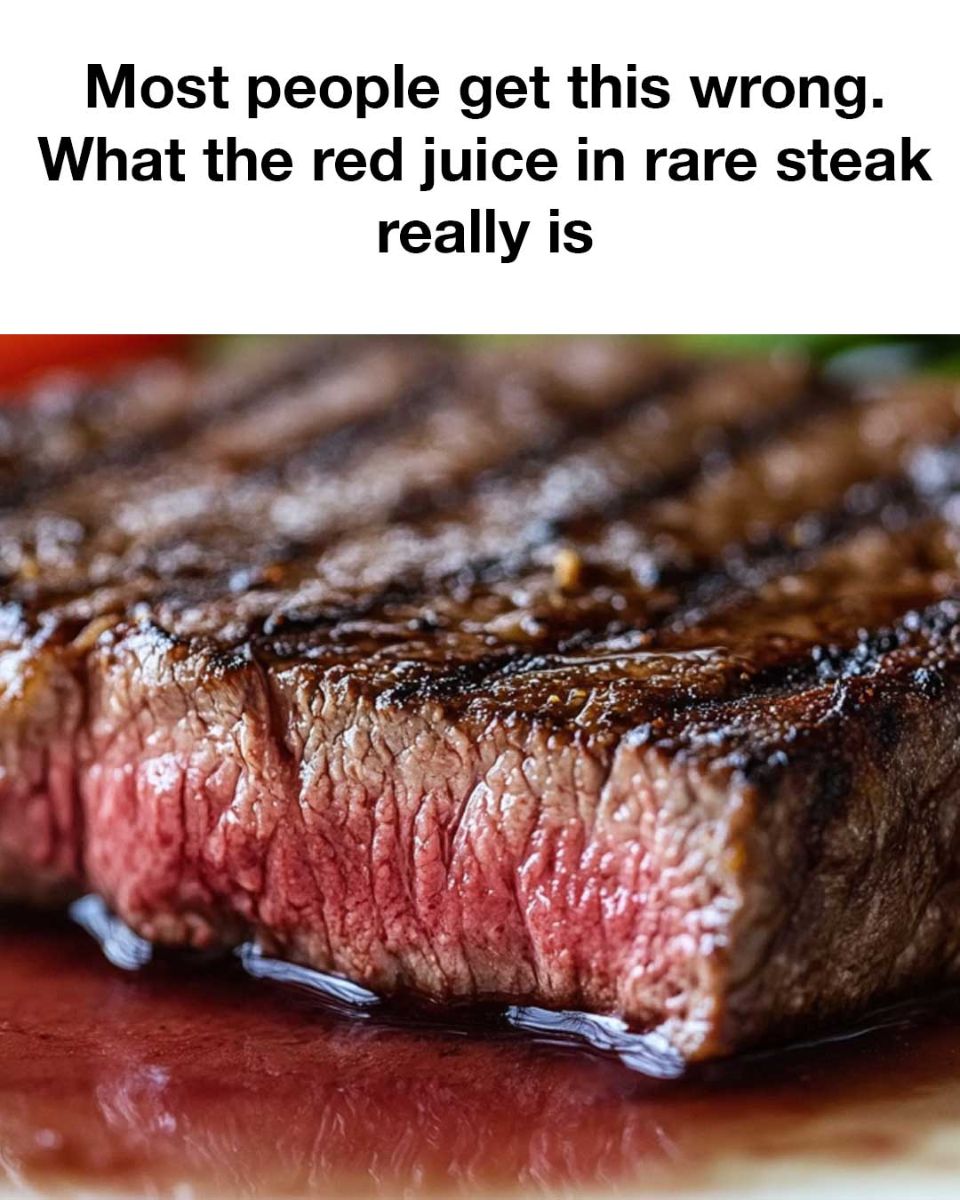
Debunking the Myth: Why It’s Not Blood
Contrary to the common misconception, the red liquid you see in a rare steak is not blood. Most of the blood in meat is removed during the slaughter and processing stages. The red juice is actually a mixture of water and myoglobin, which is released from muscle fibers during cooking. It’s completely natural, safe to consume, and is not associated with any health concerns.
What Happens to Myoglobin During Cooking?
As steak cooks, myoglobin undergoes several changes due to the increasing heat. In its raw state, myoglobin is responsible for the red or purple color of the meat. As the steak heats up, the myoglobin’s iron atoms oxidize, changing its color from red to brown. This is why a well-done steak appears brown throughout, whereas a rare steak retains its reddish hue.
At lower temperatures, such as those used to cook a rare steak (120-130°F / 49-54°C), myoglobin stays in its more stable, red form. As a result, the juices from rare steaks are richer in myoglobin and appear red or pink.
Color and Juice: Indicators of Steak Doneness
The color of the juice and the meat itself can serve as good indicators of the steak’s doneness:
- Rare Steak: Cooked to an internal temperature of 120-130°F (49-54°C), these steaks have reddish myoglobin-rich juices.
- Medium-Rare: At 130-140°F (54-60°C), the meat is pink with less red juice.
- Medium: At 140-150°F (60-65°C), the juices become clearer, and the meat’s color turns from pink to light brown.
- Well-Done: At temperatures above 160°F (71°C), the juices are nearly clear, and the meat is fully brown throughout.
Nutritional Benefits of Myoglobin-Rich Juices
The red juice from a rare steak isn’t just safe to consume; it also has nutritional benefits. Since myoglobin contains iron—important for oxygen transport in the blood—consuming these juices can help with iron intake, especially for those prone to iron deficiency. In addition to iron, these juices contain amino acids and other essential nutrients, making them a valuable part of a balanced diet.
Cultural Perception and Misconceptions
Many diners hesitate to enjoy a rare steak due to cultural perceptions about blood. Historically, there has been a taboo surrounding the consumption of blood in various societies, and this misconception extends to the juices seen in rare meat. Education about the true nature of these juices—being myoglobin rather than blood—can help dispel fears and encourage a greater appreciation of steaks cooked to various levels of doneness.
Conclusion: Enjoying Your Rare Steak with Confidence
Now that you understand that the red juice in a rare steak is myoglobin and not blood, you can enjoy your steak with confidence. This knowledge not only clears up any misconceptions but also deepens your appreciation for the complex processes that occur when cooking meat. The next time you order a juicy, rare steak, you’ll know that those red juices are a sign of a tender, flavorful, and perfectly cooked meal—one that’s safe to eat and full of nutrients.
Enjoy your steak to the fullest, whether you like it rare, medium, or well-done. Bon appétit!
